Introduction
You finish a mowing pass, pull back to check the cut, and find ragged vegetation scattered across the field — uneven strips where the material clumped, and patches that look worse than before you started. The mower itself isn't the problem. The blade configuration underneath it is.
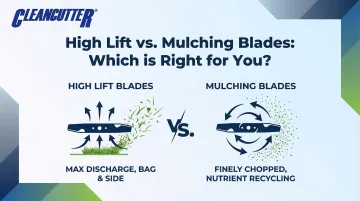
For flail mower operators, choosing between high lift and mulching blade configurations directly affects cut quality, material discharge, equipment load, and how well vegetation breaks down in the field. Running the wrong blade style for your conditions forces the machine to work harder, shortens blade life, and leaves behind the kind of uneven finish that requires a second pass.
This guide breaks down how high lift and mulching blades differ in design and airflow mechanics, when each configuration performs best, and how operators can extend blade service life in demanding conditions.
Key Takeaways
- High lift blades create strong upward airflow that lifts and cuts grass cleanly, then channels clippings into bags or discharge chutes
- Mulching blades recut clippings multiple times into fine particles, returning nutrients directly to the soil
- High lift blades handle thick, tall, or wet grass effectively; mulching blades work best on dry, regularly maintained lawns
- Mulching blades clog easily in wet conditions; high lift blades demand more engine power
- Choosing the wrong blade type for your conditions costs time, fuel, and cut quality — match the blade to the job
High Lift vs. Mulching Blades: Quick Comparison
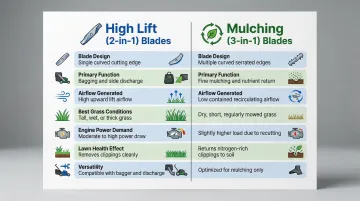
| Feature | High Lift (2-in-1) Blades | Mulching (3-in-1) Blades |
|---|---|---|
| Blade Design | Straight edge with steep angled fins | Curved surface with extended cutting edges |
| Primary Function | Discharge and bagging | Mulch, discharge, or bag |
| Airflow Generated | Maximum upward draft and velocity | Recirculating pattern, reduced outward flow |
| Best Grass Conditions | Tall, thick, or wet grass | Dry, regularly maintained lawns |
| Effect on Lawn Health | Minimal nutrient return | Returns ~2.0 lbs nitrogen per 1,000 sq ft annually |
| Engine Power Demand | High—requires more horsepower | Medium—increases if overloaded |
| Ideal User Type | Commercial operators, large properties, bagging setups | Professional operators, consistent mowing schedules |
Understanding the Naming Convention
Manufacturers label high lift blades as "2-in-1" because they cut and either discharge or bag clippings. Mulching blades earn the "3-in-1" designation because they can mulch, discharge, or bag—though they perform best when configured specifically for mulching with a closed deck.
Material Quality Matters
Blade type is only one performance variable. Blade hardness grade and coating technology determine how long either blade type holds its edge—particularly for operators covering large acreage or working in abrasive conditions like sandy soil.
What Are High Lift Blades?
High lift blades create a powerful vacuum inside the mower deck through aggressive fin angles at the trailing edge. This upward airflow stands grass blades upright before cutting, ensuring consistent height across the entire cutting width. The steep sail angle acts like a fan, generating the velocity needed to propel clippings forcefully into a bag or side discharge chute.
Design Features
High lift blades share a recognizable set of design traits:
- Straight or slightly angled cutting edge
- Deep raised fins or "sails" at the trailing edge
- Minimal blade curvature
- Geometry optimized for maximum airflow velocity rather than recutting
That aggressive sail design comes with a mechanical cost: high lift blades require substantially more engine horsepower to rotate through air and grass compared to flat or mulching blades. Operators running lower-horsepower equipment may notice reduced performance or engine strain.
Operational Benefits
High lift blades deliver:
- Strong suction that lifts bent or lodged grass for even cutting
- High-velocity discharge that clears wet, sticky clippings efficiently
- Clean, manicured appearance with defined striping effects
- Consistent cut quality across varying grass heights
Best-Fit Conditions
Choose high lift blades for:
- Tall or overgrown grass that hasn't been mowed recently
- Damp or wet mowing conditions
- Sandy soils where returning clippings adds minimal value
- Bagging operations requiring maximum collection efficiency
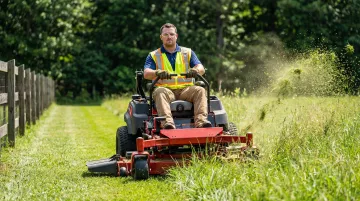
- Large commercial properties where throughput and appearance matter
- Sports turf and properties requiring professional striping
Limitations
High lift blades have drawbacks:
- Higher engine power draw affects fuel efficiency
- Clippings discharged in visible windrows when side-discharging
- Minimal nutrient benefit returned to the lawn
- Must never be used with mulching baffles or plugs installed
The strong airflow also prevents clumping under the deck when grass is thick and wet — a situation where mulching blades often struggle. Extension services recommend high lift blades for tall, thick, or extremely wet grass, where high-velocity airflow clears debris that would otherwise clog the deck.
What Are Mulching Blades?
Mulching blades use a fundamentally different approach: instead of ejecting clippings, they trap and recut them multiple times before returning fine particles to the lawn. The curved blade body and multiple sharpened surfaces create a recirculating airflow pattern. This keeps clippings suspended in the cutting zone long enough for the blade to strike them repeatedly.
Design Features
Distinctive characteristics include:
- Bowed or curved blade profile
- Additional cutting edges or serrations
- Shorter, less angled fins
- Blade geometry that reduces outward airflow while increasing particle suspension time
The result is finer particle reduction at the cost of discharge velocity—which rules out bagging but makes mulching blades well-suited for nutrient recycling.
Operational Benefits
When conditions are right, mulching blades provide:
- Natural fertilization: Finely shredded clippings act as slow-release nitrogen fertilizer
- Reduced labor: No time spent emptying bags or raking clippings
- Tidy appearance: Fine particles disappear into the turf canopy
- Cost savings: Recycled clippings return approximately 2.0 lbs of nitrogen per 1,000 sq ft annually, reducing fertilizer needs by up to 50%
Because grass clippings are 75-85% water and decompose quickly, they don't contribute to thatch buildup when properly mulched.
Best-Fit Conditions
Mulching blades work best when:
- Lawns are mowed on a consistent schedule
- Grass is dry (not damp or wet)
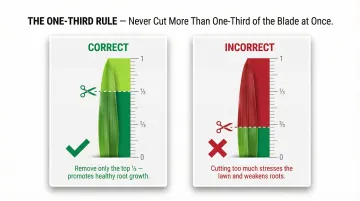
- No more than one-third of grass height is removed per pass
- Warm growing seasons allow rapid clipping decomposition
- Operators prioritize sustainable, low-input lawn management
Limitations
Mulching blades struggle in challenging conditions:
- Severe clogging risk in wet, tall, or heavy grass
- Reduced discharge velocity makes bagging ineffective
- Slower mowing speed required to achieve proper mulching, reducing productivity
- Must follow the one-third rule strictly—removing more causes clumping
The one-third rule is universally mandated by university extensions: operators must never remove more than one-third of total grass height (approximately 1 to 1.5 inches) in a single pass. Exceeding this threshold overloads the deck's capacity to suspend and chop material, causing clippings to clump beneath the deck and drop as unsightly piles.
Use Cases of Mulching Blades
Mulching blades deliver the most value for residential lawn care operators, golf course rough maintenance crews, and managed turf areas where reducing fertilizer inputs and eliminating clipping disposal are priorities. A weekly mowing schedule on a half-acre residential lawn, for example, is exactly the environment where mulching blades pay for themselves—consistent frequency keeps growth incremental enough that the one-third rule holds naturally.
High Lift vs. Mulching Blades: Which Should You Choose?
Four Decision Factors
Evaluate these criteria before selecting a blade:
1. Typical Grass Conditions
- Height, density, and moisture level at mowing time
- Frequency of wet or damp conditions in your climate
2. Mowing Frequency
- Consistent weekly schedule vs. irregular intervals
- Ability to maintain the one-third rule
3. Primary Goal
- Clean appearance and efficient discharge vs. nutrient return and reduced cleanup
- Bagging requirements vs. clipping recycling priorities
4. Equipment Compatibility
- Power rating of your engine
- Deck design and bagging system capabilities
Clear Situational Recommendations
Choose high lift blades if:
- You manage thick, tall, or frequently wet grass
- You run a bagging or side-discharge setup
- Cut appearance and throughput are priorities
- You work at commercial scale where productivity matters
- Your mowing schedule is irregular or weather-dependent
Choose mulching blades if:
- You mow on a consistent weekly schedule
- Grass is typically dry and well-maintained
- Returning nutrients to soil is a priority
- You want to eliminate bagging and disposal labor
- You can reliably follow the one-third rule
Once you've made that choice, the next variable to consider is how long your blades will last — and how much that affects your operating costs.
Blade Durability for Professional Operators
For landscaping contractors and agricultural operators making frequent blade changes or working in abrasive conditions, blade material and coating grade determine how long blades stay sharp between changes. Operating mowers with dull blades increases fuel consumption by 22% and creates torn grass tips that invite disease.
Industry benchmarks indicate commercial operators should sharpen blades every 20 to 25 hours of mowing time. In highly demanding environments like sandy soils, many professional crews swap blades every 8 to 12 hours to maintain optimal cut quality.
Blade Material Comparison:
| Material Type | Hardness | Wear Resistance | Best Application |
|---|---|---|---|
| Standard Carbon Steel | 40-45 HRC | Baseline; sharpen every 8-25 hours | Standard soils, frequent changes |
| Boron Steel | 48-55 HRC | 33% greater wear resistance | High-acreage commercial routes |
| Tungsten-Carbide Coated | Ultra-hard edge | 2-3x longer life | Sandy, abrasive environments |
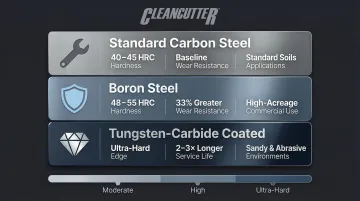
For flail mower operators, Clean Cutter offers three hardness grades (Plain, Hard-Faced, and Super-Koat) designed to extend blade life for operators who can't afford frequent downtime. Tungsten-carbide coated blades extend service life 2-3 times compared to standard blades in sandy or debris-heavy conditions.
How to Switch Between Blade Types
Mulching Kit Conversion
Converting a side-discharge deck to mulching requires more than swapping blades. True mulching needs a complete kit including:
- 3-in-1 mulching blades
- Discharge plug or cover plate to seal the side chute
- Internal deck baffles (on some models)
Direct Blade Replacement
For compatible decks, simply swap blades while ensuring:
- Correct part numbers match your mower model
- Center hole diameter fits the spindle
- Blade bolt torque specifications are followed (ranges from 50-110 ft-lb depending on manufacturer)
Safety Requirements
Before reaching under any deck:
- Park on level surface and engage parking brake
- Disengage PTO and remove ignition key
- Disconnect spark plug wire to prevent accidental starting
- Use calibrated torque wrench for proper blade installation
For Flail Mower and Tiller Operators:
Clean Cutter's catalog of hard-faced and Super-Koat replacement blades covers a wide range of flail mowers and tiller equipment — including Alamo-Mott, Rhino, Loftness, and other major brands. Their cross-reference system helps operators find the right blade for their equipment fast. Contact Clean Cutter at (800) 345-2335 or sales@cleancutter.com to identify compatible blades.
Conclusion
No single blade style wins across every condition. The right choice comes down to your operating environment and workflow:
- High lift blades suit demanding or unpredictable conditions — thick growth, wet weather, bagging operations, and commercial properties where throughput and finished appearance are priorities
- Mulching blades deliver the most value on well-maintained turf with consistent mowing schedules, where nutrient recycling cuts fertilizer costs and eliminates clipping disposal
For landscaping professionals and agricultural operators, the right blade selection reduces equipment strain, lowers fertilizer and fuel costs, and extends replacement intervals. Maintaining sharp edges and matching hardness grades to your soil conditions — whether plain, hard-faced, or Super-Koat treated — protects your equipment investment and keeps cut quality consistent across the season.
Frequently Asked Questions
Should I use high lift or mulching blades?
The choice depends on grass conditions and goals. High lift blades work better for thick, wet, or tall grass and discharge/bagging setups. Mulching blades suit regularly maintained, dry lawns where returning nutrients to the soil is the priority.
What mower blades give the best cut?
High lift blades produce the cleanest, most manicured appearance across varied grass conditions. Mulching blades create a neat finish on regularly mowed, dry lawns. Either way, blade sharpness and material quality matter as much as blade type.
Do mulching blades really make a difference?
Yes. Mulching blades return nitrogen-rich fine clippings to the soil, reducing fertilizer needs by up to 50%. That benefit only materializes under the right conditions: dry, consistently maintained grass that isn't overgrown.
Do high lift blades make better stripes?
Yes. The strong upward airflow bends grass more aggressively in the direction of travel, producing a more pronounced light-and-dark alternating pattern than mulching blades deliver.
Are high lift blades good for wet grass?
High lift blades handle wet grass better than mulching blades because the strong airflow prevents clippings from clumping under the deck. Mulching blades clog severely in wet conditions and should be avoided when grass is damp.
What does high lift mean on a lawn mower blade?
"High lift" refers to the steep angle of the blade's trailing fins or wings, which generates powerful upward airflow inside the mower deck. This lifts grass blades upright before cutting and propels clippings forcefully into a bag or discharge chute.