Introduction
Picture this: 10 acres of neglected pasture, waist-high weeds, tangled brush, and compacted soil that hasn't seen a plow in years. Your neighbor swears by a flail mower. The farm supply dealer pushes a tiller. Both cost thousands of dollars — and choosing wrong doesn't just waste money. It can shred equipment, damage soil structure, or leave you with a field of unusable debris.
Tillers break and turn soil. Flail mowers cut and mulch surface vegetation. They're built for fundamentally different jobs, yet both get recommended for "land clearing." Drive a tiller into standing brush without clearing first, and you'll wrap vegetation around the rotor until bearings fail. Hit rocky ground with the wrong blade hardness, and you'll snap tines and shear drivetrain bolts.
The consequences of the wrong call aren't theoretical — they show up as repair bills and lost field days.
This guide breaks down what each machine actually does, where each one excels, and the situational factors — terrain, vegetation density, end goals, and tractor horsepower — that should drive your decision.
Key Takeaways
- Tillers physically break and turn soil—best for seedbed prep after vegetation is cleared
- Flail mowers cut and shred surface vegetation without disturbing soil—the right starting point for initial clearing and ongoing maintenance
- Most effective approach: flail mow dense growth first, then till to prepare planting areas
- Your choice depends on your end goal, terrain conditions, and equipment capacity
- Blade quality matters critically—worn blades increase fuel use, reduce efficiency, and damage drivetrains
Tiller vs Flail Mower: Quick Comparison
| Feature | Rotary Tiller | Flail Mower |
|---|---|---|
| Primary Function | Breaks, turns, and aerates soil | Cuts and mulches surface vegetation |
| Vegetation Handling | Best after clearing; struggles with standing growth | Handles grass, brush, and saplings up to 2.8 inches |
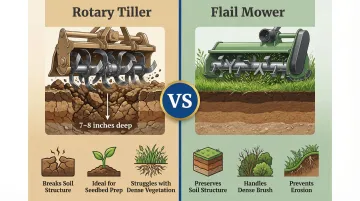
| Soil Impact | Fundamentally alters soil structure to 7-8 inches depth | Leaves soil completely undisturbed |
| Ideal Use Case | Seedbed prep, food plots, incorporating mulch | Initial clearing, brush management, maintenance |
| Required HP Range | 15-60 HP (for 5-7 ft models) | 25-80 HP (for 5-7 ft models) |
| Blade Type | Fixed tines (C-shaped or L-shaped) | Free-swinging hammers or Y-blades |
| Typical Cost Range | $2,000-$4,800 new | $7,200-$10,200 new |
Tillers work best on bare or lightly vegetated ground. They dig into soil, not through standing material. Attempting to till dense vegetation wraps stalks around the rotor, destroying seals and bearings.
Flail mowers handle standing grass, thick brush, and woody stems. Their free-swinging blade design processes material that would jam or destroy a tiller — and unlike tillers, they leave the soil completely undisturbed beneath.
That soil distinction is critical for erosion-prone slopes, established pastures, or any land not intended for replanting. Tillers fundamentally alter soil structure — beneficial for planting, destructive for erosion control. Flail mowers manage vegetation while preserving what's below the surface.
What is a Tiller?
A rotary tiller is a PTO-driven implement with a horizontal shaft carrying rotating blades (tines) that dig into, chop, and turn soil. The blade geometry and rotation direction determine how deep it penetrates, how finely it breaks up clods, and whether it can handle rocky or compacted ground.
How Tillers Work
Operational Variables:
- Tilling depth: Typically 4-8 inches, controlled by adjustable skid shoes
- Tine type: C-shaped (gradual curve), L-shaped (90-degree angle), or straight bolt-on
- Implement type: Front-tine, rear-tine walk-behinds, or 3-point hitch PTO models for tractors
For land-clearing scenarios, heavy-duty 3-point hitch PTO tillers are the relevant tools. These tractor-mounted units deliver the power and durability needed to break previously uncultivated ground.
Tine Geometry Matters:
| Tine Type | Best For | Why It Works |
|---|---|---|
| C-Tine | Heavy clay, rocky soil, compacted ground, thick residue | Gradual curve requires less horsepower to penetrate; highly durable in abrasive conditions |
| L-Tine | Sandy soil, loam, clean seedbeds | 90-degree angle creates perfectly flat, fluffy seedbed but demands more power |
For land clearing and initial field conversion, C-tines are superior due to lower horsepower draw and resilience against hidden rocks and hardpan.
The Critical Role of Blade Condition
Worn or dull tines don't just reduce performance—they increase operating costs. Field tests in abrasive soils show standard steel blades lose an average of 7.08 grams per acre. As tines round off, they struggle to penetrate, requiring multiple passes and burning more fuel.
That wear problem gets worse fast in land-clearing conditions. Rocks, roots, and compacted earth are far harsher than standard agricultural tilling — wear rates climb roughly 2.5 times higher. Hardfaced blades cut that loss to 2.84 grams per acre, a meaningful difference across a full season of ground-breaking work.
That's why blade grade matters when you're clearing ground, not just maintaining it. Clean Cutter has manufactured replacement tiller blades since 1963, offering three grades matched to job severity:
- Plain: Standard steel for light-duty applications
- Hard-Faced: 12HCr alloy for extended life in abrasive soils
- Super-Koat: Proprietary coating for maximum durability in demanding conditions
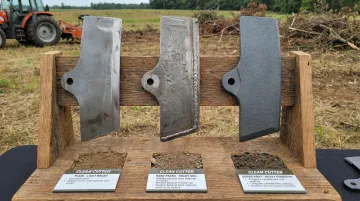
These blades are compatible with major brands including Maschio, Sicma, Nobili, and others — critical for operators who need extended blade life when breaking new ground.
Use Cases of a Tiller
Best Applications:
- Breaking new ground for gardens, food plots, or pasture seeding after initial vegetation removal
- Incorporating mulched debris back into soil to accelerate decomposition
- Busting up compacted hardpan on previously neglected land
- Preparing seedbeds on cleared acreage for planting
One hard rule: a tiller should never be the first tool on overgrown land. Clear the vegetation first, then till.
What is a Flail Mower?
A flail mower is a PTO-driven implement with a horizontally spinning rotor carrying dozens of free-swinging blades (flails). This design sets it apart from rotary cutters and tillers.
The Free-Swinging Safety Advantage
The defining feature of flail mowers is how blades attach to the rotor. Unlike rotary cutters with massive fixed blades that can launch rocks at lethal velocities, flail blades are hinged. When they strike a stone or stump, the knives fold or pivot backward to absorb shock, protecting the gearbox and tractor driveline from catastrophic damage while directing debris downward.
This makes flail mowers significantly safer and more durable in rough terrain than rotary cutters—a critical advantage for land-clearing applications where hidden obstacles are common.
Blade Types for Different Vegetation
Two blade styles cover most land-clearing needs:
| Blade Type | Best For | Trade-Off |
|---|---|---|
| Hammer Blades | Thick stems, brush, woody debris | Higher HP draw, more fuel |
| Y-Blades (Knife Blades) | Fine grasses, weeds, cover crops | Wears fast on rocks or heavy brush |
For land clearing, hammer blades are the right call. Once the initial clearing is done, switching to Y-blades delivers better fuel efficiency and cut quality for ongoing maintenance.
Operational Advantages
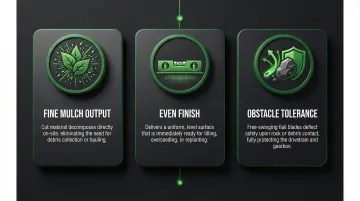
Flail mowers stand out for land clearing in three specific ways:
- Fine mulch output: Cut material breaks down into small particles that decompose on-site, eliminating debris hauling
- Even finish: Leaves a uniform surface ready for tilling or direct seeding
- Obstacle tolerance: Free-swinging blades deflect on rock and stump contact rather than transferring shock to the drivetrain
Capacity and Limitations
Standard agricultural flail mowers handle saplings and woody stems up to 1-2 inches in diameter for light-duty models, and up to 2.8 inches for heavy-duty models. Anything larger requires a forestry mulcher or dedicated brush cutter.
Horsepower matters as much as blade selection: light/mid-duty models require 24-79 HP, while heavy-duty land-clearing models demand 35-140 HP. Underpowered tractors cause the rotor to bog down, cutting quality drops, and drivetrain stress climbs.
One hard boundary to know going in: flail mowers work entirely above ground. They cannot till soil. If your project requires soil preparation after clearing, you'll need a tiller in the workflow as well.
Use Cases of a Flail Mower
Ideal Applications:
- First-pass clearing on overgrown fields, brushy fence lines, and roadside vegetation
- Orchards and vineyards where cutting without soil disturbance is essential
- Ongoing land management after initial clearing
- Ditch bank maintenance and fire hazard reduction on dry land
- Any scenario requiring vegetation removal while preserving soil structure
Tiller vs Flail Mower: Which Is the Right Tool for Land Clearing?
Neither tool "wins" universally. The right choice depends on four factors: your end goal, current land condition, available tractor horsepower, and timeline.
Choose a Flail Mower If:
- Land is heavily overgrown with grass, weeds, brush, or light woody growth
- You want to mulch material in place rather than haul debris
- Soil should remain undisturbed (sloped land, established pasture thinning, erosion-prone areas)
- You're managing land on a recurring basis rather than doing one-time clearing
- Terrain contains rocks or stumps that would damage tiller tines
Choose a Tiller If:
- Vegetation has already been cleared or is minimal
- The goal is seedbed preparation, food plot establishment, or new lawn installation
- Soil is compacted and needs aeration
- Land is relatively free of large rocks and debris
- You're ready for the cultivation phase after clearing is complete
Use Both in Sequence If:
You're converting neglected, heavily overgrown land for farming or planting. The optimal approach:
- Flail mow first to knock down and mulch all surface vegetation
- Allow brief decomposition if time permits (optional but beneficial)
- Till second to incorporate mulch and break up soil at shallow depth (2-4 inches)
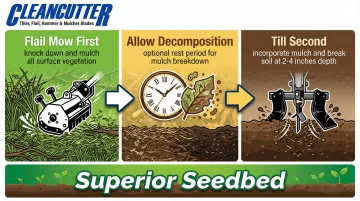
This two-step approach reduces tiller strain, prevents rotor wrapping, and produces superior seedbeds.
The Cost of Skipping Steps
USDA NRCS guidance strongly recommends flail mowing heavy residues and overgrown vegetation before tilling. Attempting to till tall, standing vegetation without mowing first causes stalks to wrap around the rotor, destroying bearing seals and bogging down the tractor.
Operators who skip straight to tilling routinely report more passes, more fuel, and unplanned repair bills. The sequential approach saves all three — flail mowing first means the tiller encounters broken-down mulch rather than tangled standing stalks, which cuts the number of passes needed and keeps the rotor clean.
Blade Wear and ROI in Land Clearing
That same debris that slows your workflow also puts the hardest miles on your blades. Both tools work at their hardest during land clearing, and rocks, roots, and surface debris accelerate blade and tine wear faster than any other application. Replacing blades at the right interval—rather than running worn blades—protects gearboxes and reduces overall operating cost.
Worn flail mower blades force the tractor to work harder, burning excess fuel and stressing the engine. Missing or broken tiller tines are equally costly. They create severe rotor imbalance, causing vibrations that destroy bearings and send damaging harmonics straight into the tractor's PTO shaft.
Clean Cutter's flail blade catalog covers compatible replacements for brands including Alamo-Mott, Rhino, Loftness, and Seppi. For land clearing specifically, hard-faced and Super-Koat coated blades hold an edge longer under rocky, debris-heavy conditions — meaning fewer change-outs and less downtime per acre cleared.
Conclusion
For most land-clearing scenarios, the flail mower earns the first pass. It handles standing vegetation safely, leaves soil intact, and prepares the site for whatever comes next. The tiller earns its place in the second phase, when the goal shifts from clearing to cultivating.
Each tool has a defined role. Flail mowers manage biomass above ground; tillers work soil below it. Used in sequence, they transform overgrown land into productive acreage efficiently and safely.
The Maintenance Factor
Whichever tool is part of your land-clearing workflow, blade condition is not optional. Worn tines and flail blades reduce productivity, increase fuel consumption, stress machinery, and often cause costly drivetrain repairs. The difference between standard and hardfaced blades can mean 2.5 times longer service life in abrasive conditions.
Investing in the right replacement blades for your specific equipment and application protects your investment in both the implement and the tractor. Whether you're breaking new ground or knocking down brush, blade quality sets the ceiling on how long your equipment lasts and how much each acre costs to work.
Frequently Asked Questions
Can a flail mower be used as a tiller?
No. A flail mower cuts and mulches surface vegetation but does not penetrate or turn earth. It lacks the ground-engaging tines, gear-drive torque, and depth-control mechanisms required for soil cultivation.
When not to use a tiller?
Avoid tilling in these conditions:
- Dense standing vegetation or woody debris (clear with a mower first)
- Slopes steeper than 18% — severe erosion risk
- Heavy rock content that would damage tines
- Established pastures where soil structure should be preserved
How big of trees will a flail mower cut?
Standard agricultural flail mowers handle saplings and woody stems up to 1-2 inches in diameter, with heavy-duty models capable of up to 2.8 inches. Anything larger requires a forestry mulcher or dedicated brush cutter. Attempting to cut oversized material damages blades and stresses the rotor.
How many horsepower does it take to run a flail mower?
Light-duty models typically require 25-40 HP, mid-range models 40-70 HP, and heavy-duty land-clearing models 70-100+ HP. The exact requirement depends on cut width and vegetation density. Insufficient horsepower causes the rotor to bog down, reducing effectiveness and stressing the tractor.
What is the average cost to clear 1 acre of land?
Professional land clearing costs range from $500 to $6,200 per acre depending on vegetation density, terrain, tree size, and region. Light brush clearing runs $500-$1,500 per acre, while heavy forest with stump removal reaches $3,000-$6,200 per acre.
What is the best attachment for clearing land?
The best attachment depends on what you're working with. A flail mower suits overgrown vegetation and brush without disturbing soil. A rotary cutter handles very dense brush, though with rougher results. A tiller comes in once vegetation is cleared and soil prep is the goal. Match the tool to the condition.