Introduction
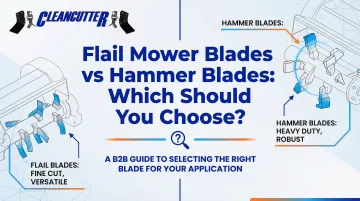
Replacing flail mower blades for the first time often leads to a costly mistake: operators choose the wrong blade type, resulting in poor cut quality, accelerated wear, or damage when hitting rocks. Both Y-blades and hammer blades are standard options, yet they serve very different purposes.
The blade you choose directly affects cut finish, longevity, fuel consumption, and how safely your mower handles hidden debris. Operating with the wrong type can cause severe rotor imbalance, leading to gearbox failure and destroyed bearings.
This guide breaks down how Y-blades and hammer blades differ, which conditions each handles best, and what to check before you order replacements.
Key Takeaways
- Y-blades feature a forked, double-edged design optimized for grass and light vegetation with finish-quality cuts
- Hammer blades are heavy, T-shaped flails built for thick brush, woody stems, and rocky terrain
- Y-blades deliver cleaner finishes; hammer blades offer superior impact resistance and durability
- Choose based on vegetation type, terrain conditions, and whether cut quality or blade survival matters more
- Both blade types come in plain, hard-faced, and Super-Koat grades, each with a different wear life and replacement cost
Y Blades vs Hammer Blades: Quick Comparison
| Feature | Y-Blades | Hammer Blades |
|---|---|---|
| Blade Shape | Forked or double-edged Y-shape | Solid rectangular or T-shaped |
| Primary Vegetation | Grass, weeds, light vegetation | Thick brush, saplings, woody stems |
| Cut Quality | Excellent—clean, manicured finish | Rough—coarse shredded mulch |
| Durability/Wear | Low in rocky conditions; prone to bending | High—withstands rocks and debris impacts |
| Terrain Suitability | Clean, maintained fields and roadsides | Rocky terrain, overgrown pastures, debris-heavy areas |
| Typical Replacement | More frequent in mixed terrain; reversible to extend life | Less frequent; non-reversible but longer baseline durability |
These comparisons hold up in most conditions, but terrain roughness, mower RPM, and blade material grade all shift the balance. The sections below break down where each blade type actually earns its keep.
What Are Y Blades (Flail Mower Blades)?
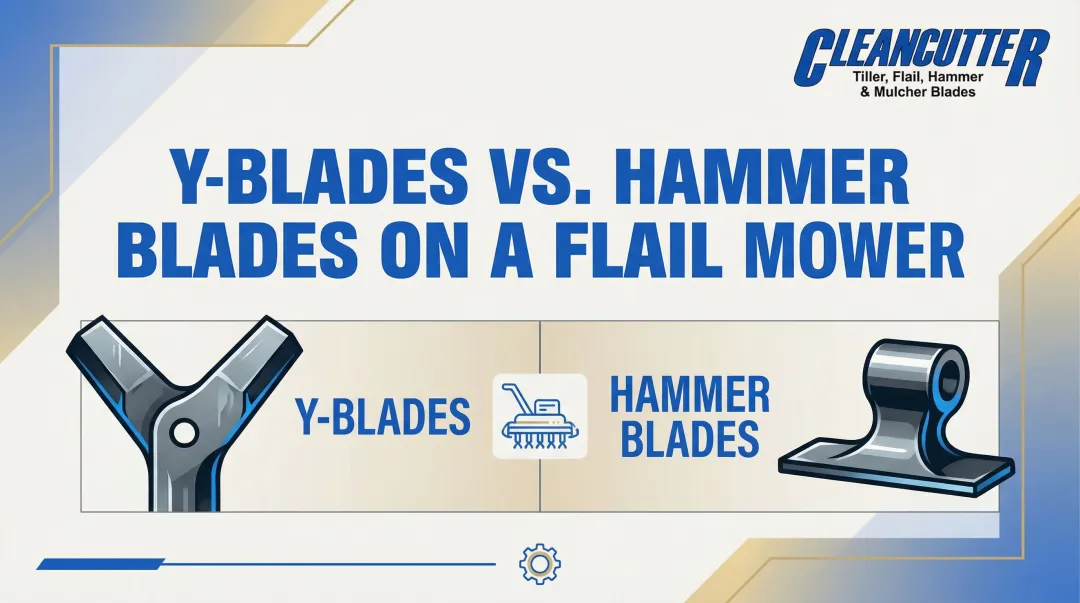
Y-blades (also called flail knives or SideSlicers) have a distinctive forked or double-edged Y-shape. They hang from the rotor shaft via a pivot pin, allowing them to swing freely. This design creates a slicing action rather than blunt impact, making them well-suited for grass and lighter vegetation.
Operational Benefits
Y-blades generate a finer, more even mulch with minimal tearing. The fast, aerodynamic slicing action creates updraft and suction that lifts grass before cutting, producing cleaner pasture and lawn finishes. That finish quality matters most to landscaping professionals and operators managing maintained fields.
Safety and Deflection Mechanism
Because Y-blades are free-swinging on their pivot, they can deflect slightly on light impact. However, their thinner profile makes them vulnerable to bending or breakage when encountering rocks or hardwood stumps at speed. OEM manuals explicitly warn that using lightweight blades in rocky terrain leads to rapid breakage, causing severe rotor imbalance that can destroy gearbox seals and driveline bearings.
Hardness Grade Variations
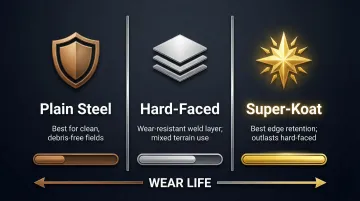
Y-blades come in different hardness grades:
- Plain steel — Standard option for clean, debris-free conditions
- Hard-faced — Wear-resistant surface layer welded on; extends edge life in mixed terrain
- Coated (Super-Koat) — Proprietary surface treatment that outlasts hard-faced in edge retention
Hard-faced and coated variants reduce replacement frequency, lowering cost-per-acre over a full season. Choosing the right grade depends on your terrain — and on the application scenarios below.
Use Cases of Y Blades
Ideal scenarios include:
- Managed pastures and maintained grass fields
- Roadside vegetation with regular mowing schedules
- Orchards and vineyards
- Sports fields and municipal turf
- Any application where finish cut quality matters more than shredding power
Equipment fit: Y-blades are standard on many light-to-medium duty flail mowers from brands like Maschio, Nobili, and Sicma. Operators running these machines should verify blade compatibility before switching types. Clean Cutter's catalog lists compatible SideSlicer replacements by equipment manufacturer, making it straightforward to confirm the right fit before ordering.
What Are Hammer Blades?
Hammer blades (also called impact flails) have a solid, rectangular or T-shaped body with considerably more mass than Y-blades. They're mounted on the rotor using a swing-away pivot design. The added weight creates high-impact striking force rather than a slicing action, making them effective at shredding and mulching woody material.
Durability Advantage
The thick, hardened steel construction allows hammer blades to absorb repeated impacts from rocks, stumps, and buried debris without bending. When a hammer blade strikes a rock, the swing-away pivot deflects the blade rather than snapping it—a key safety and maintenance benefit that prevents catastrophic rotor damage.
Cut Quality Trade-Off
Hammer blades produce coarser, shredded mulch output rather than a fine finish. This is acceptable for brush clearing and land reclamation but not ideal where a manicured appearance is expected. The blunt-force crushing action also demands significantly higher PTO horsepower and increases fuel consumption compared to Y-blades.
Hardness Variations
Like Y-blades, hammer blades vary in steel hardness:
- Plain forged steel — Standard option for general brush work
- Hard-faced — Welded wear-resistant surface layer for abrasive conditions
- Carbide-tipped — Tungsten carbide inserts achieve up to 5 times longer service life in extreme forestry mulching and stone-crushing applications
Clean Cutter's Super-Koat hammer blades fall between hard-faced and carbide-tipped on the durability spectrum — a practical option for rocky terrain where plain steel wears too fast but full carbide isn't warranted.
Use Cases of Hammer Blades
Ideal scenarios include:
- Overgrown pastures and brush reclamation
- Roadside vegetation management with unpredictable debris
- Ditch banks and forestry edge maintenance
- Any terrain with rocks, roots, or hidden obstacles where blade survival matters more than cut aesthetics
Equipment fit: Hammer blades are commonly spec'd on heavy-duty flail mowers from brands including Alamo-Mott, Rhino, Loftness, and Seppi. Operators should cross-reference blade dimensions and mounting hole specs before ordering replacements.
Y Blades vs Hammer Blades: Which Is Better?
"Better" is context-dependent. Evaluate three primary decision factors:
- Vegetation type and density
- Terrain and debris conditions
- Desired cut output quality vs. blade replacement cost tolerance
Vegetation and Terrain Guide
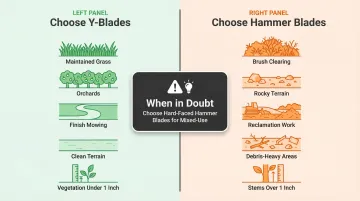
Choose Y-blades when:
- Mowing maintained grass on clean terrain
- Cut quality and finish appearance are priorities
- Vegetation is primarily under 1 inch in diameter
- Rocks and debris are minimal or absent
Choose hammer blades when:
- Encountering brush over 1 inch diameter
- Mixed debris or rocks may be present
- Terrain is unpredictable or rough
- Blade survival matters more than finish quality
Cut Quality vs. Durability Trade-Off
Using hammer blades in light-grass applications increases fuel draw unnecessarily and produces a coarser finish than needed. Conversely, using Y-blades in brush or rocky conditions accelerates blade damage and increases replacement costs.
According to operator reports, while Y-knives are better for grass, "hammers are far superior in thick brush." One operator noted that Y-style knives achieve cut quality between a rotary bush hog and a finish mower on maintained fields.
Blade Material Grade Matters as Much as Blade Type
Whatever blade style you run, operators in abrasive or mixed conditions should prioritize hard-faced or coated blade grades. This single upgrade can meaningfully reduce downtime and cost-per-operating-hour.
Clean Cutter carries Plain, Hard-Faced, and Super-Koated grades across a wide range of flail mower brands, so you can match blade durability to actual field conditions rather than settling for a one-size-fits-all option.
Situational Summary Recommendations
- Choose Y-blades for: Finish mowing, orchards, maintained grass fields
- Choose hammer blades for: Brush clearing, reclamation work, rough pastures, anywhere debris contact is likely
- When in doubt: Hammer blades in a hard-faced grade offer the best balance of durability and versatility for mixed-use applications
Real World Scenarios: Applying the Decision
Upgrading to Hammers for Rocky Pasture Management
Operators frequently switch to hammer blades when dealing with unpredictable terrain. One TractorByNet user reported using hammer blades for ground-engaging work on rocky terrain, noting they handled occasional rocks well without breaking until completely worn down—a stark contrast to Y-blades that would have failed repeatedly under the same conditions.
Reverting to Y-Blades for Municipal Roadside Finishing
For maintained turf and roadsides, operators switch to Y-blades for cleaner finishes. One operator reported using Y-style knives on an 88-inch Alamo flail mower, achieving cut quality between a rotary bush hog and a finish mower. He noted that Y-blades don't tear up grass unless the mower bottoms out.
In a separate account, another operator stretched blade life to two years simply by keeping the mower off rocky ground and away from heavy brush.
Finding the Right Blade for Your Equipment
If you know your mower brand but aren't sure which blade style or hardness grade to order, Clean Cutter's cross-reference system takes the guesswork out of it. Look up your equipment manufacturer—Alamo-Mott, Maschio, Rhino, Loftness, Seppi, and 15+ others are covered—and the system returns the compatible replacement blade in the grade that fits your application.
Conclusion
The right blade choice reduces unplanned downtime, lowers cost-per-acre, and protects the mower drum from damage. Y-blades serve operators who prioritize cut quality in clean, lighter conditions. Hammer blades serve those dealing with brush, rough terrain, or debris risk.
Blade material grade—plain, hard-faced, or coated—is the variable most operators overlook, yet it drives real-world wear life and replacement cost more than blade style alone. Before ordering, run through these three questions:
- What's your terrain? Rocky, debris-heavy ground demands hammer blades with hard-faced or Super-Koat treatment.
- What are you cutting? Light grass favors Y-blades; dense brush or saplings call for hammers.
- What's your replacement budget? Higher-grade materials cost more upfront but reduce change-out frequency and downtime.
Match those answers to your blade selection, and you're making a decision grounded in operational reality rather than habit.
Frequently Asked Questions
What is the difference between Y blades and hammer blades on a flail mower?
Y-blades have a forked double-edge profile designed for slicing grass and lighter vegetation with a clean finish. Hammer blades are heavier and T-shaped, designed to impact and shred brush, woody stems, and vegetation in rough terrain with debris.
What blades are best with a flail mower?
The best blade depends on your application—Y-blades for maintained grass and finish-quality cuts, hammer blades for brush clearing and rough terrain. Blade material grade (hard-faced or coated) further extends service life in demanding conditions.
What are the three types of blades?
The three common flail mower blade types are:
- Y-blades — forked profile, designed for grass and light vegetation
- Hammer blades — heavy T-shaped, built for brush, debris, and rough terrain
- Flail knives — straight-edged, used for finer mulching and specialty applications
How long do flail mower blades last?
Blade lifespan varies widely by terrain, vegetation type, and blade material. Plain steel blades may need replacement within a season in abrasive conditions, while hard-faced or coated blades last significantly longer. Monitoring for visible wear or edge damage is the most reliable indicator for replacement timing.
Do you sharpen flail mower blades?
Y-blades can be sharpened to restore cutting performance. Hammer blades are typically replaced rather than sharpened. OEM manuals prohibit straightening, welding, or hard-facing broken blades—heat alters the steel's temper and can cause unpredictable shattering.
How much HP does it take to run a flail mower?
HP requirements vary by mower width and blade type. Lighter Y-blade mowers on compact tractors typically need 20-30 HP, while heavy-duty hammer blade setups for brush clearing require 40-80+ HP.