Introduction
Choosing the wrong mulching blade costs more than you think. Poor shred quality leaves clumps that smother turf, accelerated wear forces premature replacement, and increased downtime during peak season cuts into profitability. For agricultural and landscaping operators, blade selection isn't a maintenance detail—it's a performance and cost issue that directly impacts overall profitability.
This guide covers:
- Mulching blade types and how design affects output quality
- Material grade and coating technology that determine service life
- Sizing and compatibility essentials that prevent dangerous rotor imbalance
- Matching the right blade to your equipment and operating conditions
Whether you're managing roadside vegetation or commercial turf, the right blade reduces total cost per operating hour.
Key Takeaways
- Blade geometry and steel hardness directly control how finely clippings are recut and how fast they decompose
- Match blade type to vegetation: Y-blades and hammers for woody debris, knife-style flails for grass and light residue
- Confirm blade length, center hole diameter, and mounting hardware style against OEM specs before ordering
- Hard-faced or coated blades outlast plain steel in abrasive soils — plain steel suits clean turf conditions
- Use manufacturer cross-reference tools to find verified replacements without guesswork
What Are Mulching Blades?
Mulching blades are cutting components engineered to sever and repeatedly recut grass, crop residue, or vegetation into fine particles that disperse back into the soil. Unlike standard blades that cut and discharge material in one pass, mulching blades keep material circulating for multiple cutting passes before release.
For professional vegetation management—roadside mowing, orchard floors, cover crop termination—this means flail-style mulching blades mounted on hammer rotors or Y-blade configurations. Blade choice in these applications directly impacts operational costs, decomposition rates, and soil health outcomes.
How Mulching Blades Work
Mulching blade geometry—curved surfaces, multiple cutting edges, or hammer/Y/knife-shaped flail designs—keeps material recirculating within the rotor housing for multiple cutting passes before dispersal. This repeated action produces finer particles that decompose faster and integrate into the soil more effectively.
Standard blades prioritize single-pass cutting and rapid discharge—useful when you're collecting or side-discharging material. Mulching blades trade that discharge speed for finer particle output and on-site nutrient return, which is the right tradeoff when material needs to stay in the field rather than pile into windrows.
Benefits of Mulching Blades for Agricultural and Landscaping Operations
Core operational benefits:
- Breaks down faster into the soil, speeding nutrient cycling through finer particle size
- Eliminates most windrow cleanup, reducing labor time between passes
- Cuts irrigation costs — a 5 cm mulch layer reduces surface evaporation by up to 60%
- Returns material on-site, eliminating bagging and hauling expenses entirely
In commercial vegetation management, these gains compound. Field studies confirm soil moisture increases by 4% when clippings are returned rather than removed—measurable drought buffering that requires no additional irrigation input.
Key Factors to Consider When Buying Mulching Blades
Mulching blade selection is not one-size-fits-all. The right blade depends on equipment type, operating environment, vegetation density, and required service interval. The following factors connect blade specifications to measurable operational outcomes.
Blade Design and Cutting Style
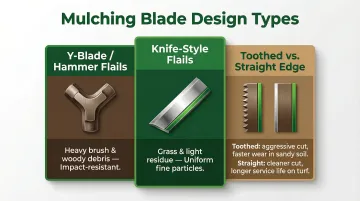
Main mulching blade designs:
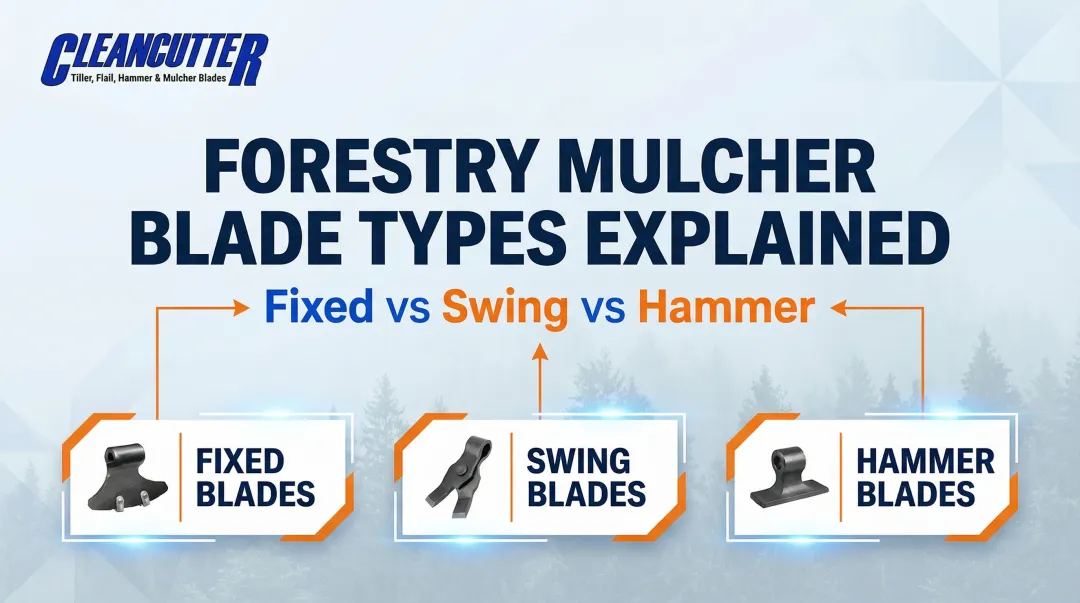
- Y-blades and hammer flails — Excel in heavy brush and woody debris; impact-resistant design handles irregular material without fracturing
- Knife-style flails — Deliver finer cuts on grass and light crop residue; cleaner edge geometry produces uniform particle size
The trade-off between toothed/serrated edges and straight-edge designs matters. Toothed edges provide more aggressive mulching and produce finer output, making them ideal for heavy or irregular vegetation. But they wear faster in sandy conditions where abrasive particles dull the serrations. Straight-edge designs last longer and deliver cleaner cuts on uniform turf, but don't shred as aggressively.
Steel Grade and Blade Hardness
Base steel grade directly determines edge retention and impact resistance. Low-hardness plain steel works adequately for clean turf applications where the blade contacts minimal debris. Hard-faced blades are necessary in abrasive or stony conditions where rapid dulling otherwise shortens service intervals.
Hardness grade correlates with blade wear life under comparable operating conditions. Higher Brinell hardness ratings indicate greater resistance to deformation and edge wear, extending the time between replacements. Operators working rocky terrain or high-silica soils should prioritize hard-faced options to avoid frequent blade changes during peak season.
Blade Coating Technology
Surface coatings provide extra abrasion resistance beyond the base steel, which matters most for operators working in sandy or high-silica soils where uncoated blades dull quickly.
Clean Cutter's Super-Koat coating is an example of a proprietary surface treatment designed to extend blade service life in demanding conditions. Comparing coated versus plain blades under similar conditions is worth doing before you buy. If you're replacing blades every few weeks in abrasive soil, upgrading to a coated option reduces total cost per operating hour even if the upfront price is higher.
Equipment Compatibility and Mounting Specs
Blade compatibility goes beyond length. Operators must verify center hole diameter, bolt hole pattern, blade width, and rotor pocket depth against their equipment's OEM specification to avoid vibration, unsafe imbalance, or improper clearance.
Even a small mismatch can create dangerous rotor imbalance or inadequate ground clearance. Use OEM part numbers and manufacturer cross-reference tools to confirm compatibility before ordering — guessing based on visual similarity or blade length alone leads to returns and downtime.
Operating Conditions and Environment
How terrain and soil composition should drive material selection:
- Rocky or sandy soils — Demand harder, coated blades to resist rapid dulling from abrasive contact
- Clean grass or light crop residue — Can run plain-grade blades with acceptable service life
- Wet, dense vegetation — May require wider hammer designs to prevent clogging and maintain airflow
Running a lightly coated blade in high-abrasion terrain accelerates wear, shortens replacement cycles, and drives up total cost of ownership. Match the blade grade to the harshest condition you regularly encounter, not the average.
Mulching Blade Sizes and Compatibility: Getting It Right
Four key dimensions define whether a mulching blade fits your rotor correctly:
- Overall blade length — determines cutting swath per flail station
- Blade width and thickness — affects durability and rotor balance
- Center hole diameter — must match the mounting pin exactly
- Bolt hole pattern — varies across rotor models, even within the same brand
Even a small mismatch in any of these can create dangerous rotor imbalance or inadequate ground clearance.
How to measure an existing blade for replacement:
- Measure tip-to-tip length
- Measure width at the widest point
- Measure thickness with calipers
- Measure center hole diameter and bolt hole spacing
- Locate the OEM part number stamped or labeled on the blade body — this alone can confirm all other dimensions
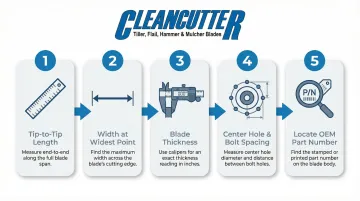
The OEM part number is the fastest path to a verified replacement. It removes guesswork and confirms identical mounting and balance characteristics without measuring from scratch.
How cross-reference catalogs work:
Most flail blade manufacturers publish compatibility charts that cross OEM part numbers to aftermarket replacements. Clean Cutter's catalog covers replacements for major equipment brands including Alamo-Mott, Maschio, Rhino, Loftness, Seppi, Sicma, and others, allowing operators to verify fit without relying on dealer availability alone.
Common sizing mistakes to avoid:
- Ordering by blade length alone without checking hole pattern
- Assuming blades are interchangeable across different rotor models from the same brand
- Substituting a thinner blade to cut cost without accounting for reduced impact resistance in hard-use conditions
How Clean Cutter Can Help You Find the Right Mulching Blade
If you run a flail mower and need mulching blade replacements, Clean Cutter has been manufacturing verified aftermarket flail and tiller blades since 1963 — built for professional agricultural and landscaping equipment, not the consumer-grade market.
Key differentiators:
- Six decades of production experience across flail mulcher, hammer, and tiller blade types
- Three blade grades — Plain, Hard-Faced, and Super-Koat coated — to match operating conditions from clean turf to abrasive, rocky terrain
- Broad compatibility across leading equipment brands including Alamo-Mott, Maschio, Rhino, Loftness, Seppi, Sicma, Sidewinder, Servis, and others
- OEM cross-reference system that maps manufacturer part numbers directly to verified replacement blades, so you order with confidence
- Full flail hardware catalog — U-bars, shackles, and mounting components — available alongside blades to simplify ordering
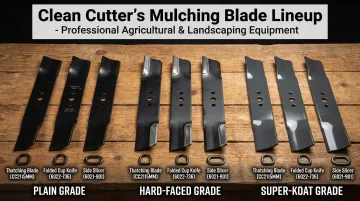
For operators running multiple equipment brands, sourcing blades and hardware from a single catalog means one order, one cross-reference, and no compatibility surprises at installation.
Conclusion
Selecting a mulching blade isn't about finding the cheapest or most popular option—it's about matching blade design, material grade, coating, and dimensions to your specific equipment, operating environment, and service interval goals. The right match directly reduces mid-season failures and lowers your total blade cost per operating hour.
That said, the right blade today may not be the right blade next season. Conditions shift, vegetation types change, and equipment hours accumulate. Revisit your blade specifications at least once per season — specifically when:
- Vegetation type or density changes significantly
- Equipment hours push into heavy-wear territory
- Work sites shift to rockier or wetter conditions
- Performance drops before your expected replacement interval
Frequently Asked Questions
What's the difference in mulching blades?
Mulching blades differ from standard blades in geometry: curved surfaces, serrated edges, or multi-pass flail designs recut material into finer particles rather than discharging it in a single pass. Within mulching blades, further differences include blade shape (Y, hammer, knife), hardness grade, and coating type.
Do mulching blades really make a difference?
Yes, mulching blades measurably improve material breakdown speed, reduce debris windrows, and return nutrients to the soil more effectively than standard blades. The degree of improvement depends on matching the correct blade design to the vegetation type and mowing frequency.
What is the best mulching blade?
"Best" depends on application. For fine turf, a curved-edge mulching blade in plain or coated steel works well. For heavy brush or crop residue, a hammer or Y-blade in hard-faced or Super-Koat grade outperforms lighter designs.
Are toothed mulching blades better?
Toothed or serrated edges improve shredding aggressiveness and produce finer output, making them well suited for heavy or irregular vegetation. However, they wear faster in sandy or abrasive soils, so material grade and coating matter more when running toothed designs.
Is a high-lift blade better for mulching?
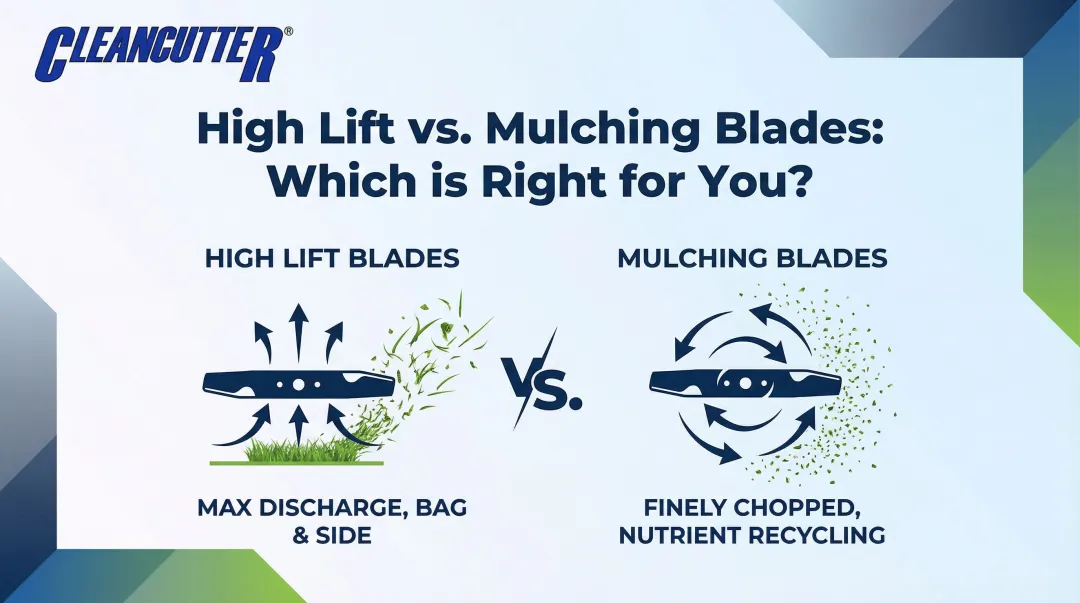
High-lift blades are optimized for discharge and bagging efficiency, not mulching. Their upward airflow design moves clippings away from the deck quickly rather than recirculating them for recutting. For true mulching results, a dedicated mulching blade design is the appropriate choice.
What is a 3-in-1 mulching blade?
A 3-in-1 blade is designed to mulch, side-discharge, and bag clippings from a single blade, using curved mulching geometry combined with enough airflow lift to handle all three modes. It's a practical choice when versatility matters more than peak performance in any one function.