Introduction
Using the wrong tiller blade costs you more than a premature replacement order. The operational penalties add up fast:
- Poor soil preparation that reduces seedbed quality
- Accelerated blade wear that doubles replacement frequency
- Higher fuel consumption per acre from increased soil resistance
- Wasted time from repeated passes or equipment stalling
Blade selection directly drives tillage efficiency and total operating cost — it's not a minor purchasing call.
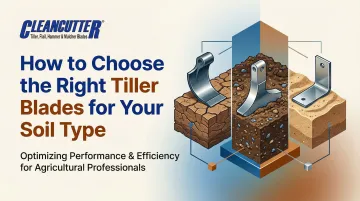
This guide covers how soil characteristics — texture, density, moisture, and vegetation load — should determine your blade shape, material grade, and hardness selection. Sandy loam, wet clay, rocky reclaimed land, and root-laden soil each place different mechanical demands on a rotating tine, and a one-size-fits-all approach fails across all of them.
Match the blade to the soil, and you cut fuel draw, extend blade life, and reduce replacement cycles.
Key Takeaways
- Tiller blades (tines) come in distinct shapes—Bolo, Pick & Chisel, Slasher, C-shape, and L-shape—each suited to specific soil and vegetation conditions
- Sandy or loose soils work best with L-shape or Bolo tines; clay, compacted, or rocky ground calls for C-shape or Pick & Chisel blades
- Blade material and hardness grade (standard, hard-faced, or coated) determine wear rate and service life—critical in abrasive soils
- Right-sized blade selection cuts replacement frequency, reduces drivetrain stress, and improves seedbed quality
What Are Tiller Blades?
Tiller blades—also called tines—are the rotating cutting elements mounted on the rotor shaft of a rotary tiller. They break, turn, and mix soil by spinning at high speed, and blade geometry directly determines how effectively they penetrate and process different soil profiles. The shape, angle, and material of each tine dictate power requirements, wear rate, and final seedbed condition.
Blade Shape Types
The three primary tine designs found on most rotary tillers are:
- Bolo tines — curved blades that lift and turn soil without wrapping vegetation around the rotor; the go-to for deep tilling in most field conditions
- Pick & Chisel tines — narrow, aggressive tips that drive into compacted or rocky ground; effective penetrators, but prone to clogging in heavy vegetation
- Slasher tines — short, sharp blades built to cut through sod and root-laden soil before the turning action begins; essential for fields with dense cover crops
C-Shape vs. L-Shape Tines
L-shape tines form a 90-degree angle, driving the full cutting edge into soil simultaneously. This geometry works best in sandy, loamy, and loose soil where aggressive penetration doesn't overload the PTO. However, research shows that in wet clay conditions, L-blades require up to 33% more power than C-blades at comparable speeds.
C-shape tines have a gradual, open curve that allows progressive soil penetration rather than simultaneous impact. This controlled entry reduces shock loads on the rotor and prevents stalling in dense clay, rocky ground, or heavily compacted soil.
Blade Material & Hardness Grades
Shape gets your blade into the soil — material determines how long it stays effective. Composition is the second variable that separates a blade suited for a season from one that lasts several:
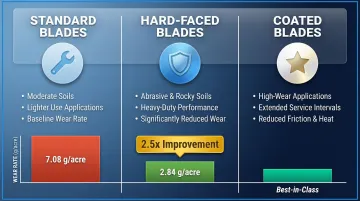
- Standard (plain) blades suit lighter soils with moderate use cycles
- Hard-faced blades use a reinforced wear surface for abrasive or rocky conditions—field testing shows hard-facing reduces wear rate from 7.08 grams per acre to just 2.84 grams per acre in sandy soils, a 2.5x improvement
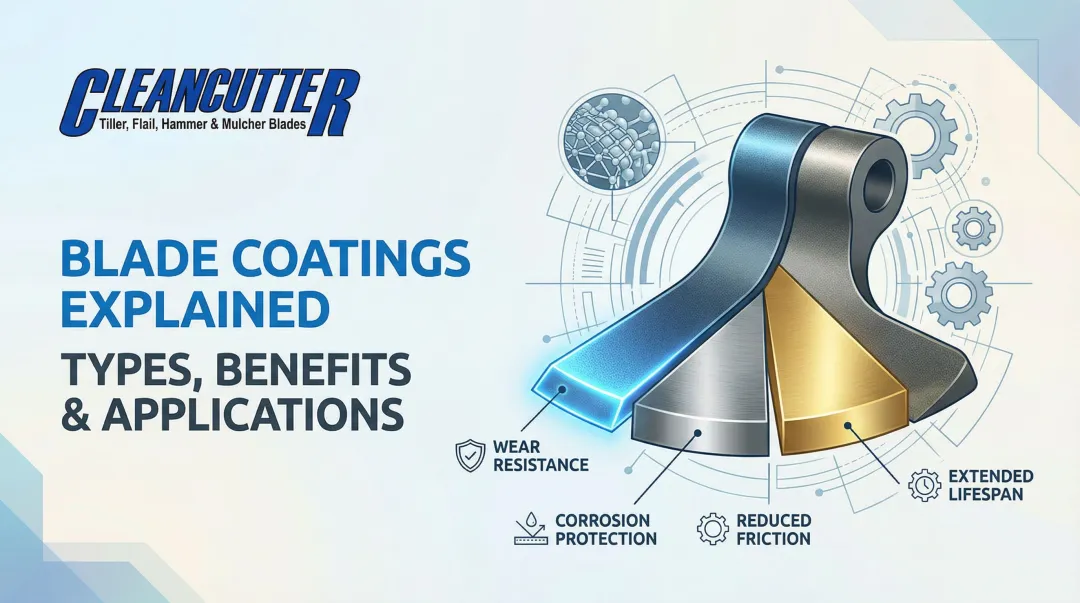
- Coated blades (such as those with proprietary surface treatments) reduce friction and corrosion while extending service intervals in high-wear applications
How Soil Type Determines the Right Tiller Blade
Soil texture, density, moisture level, and organic matter content each place different mechanical demands on a tiller blade. Selecting the wrong type increases stress on the rotor, accelerates blade wear, and produces a poorly prepared seedbed.
Sandy and Loamy Soils
Lighter, loosely packed soils offer low resistance, so aggressive blade angles are unnecessary and can actually throw soil too far or cause uneven mixing. L-shape or Bolo tines engage the full blade edge and deliver consistent depth and even soil turnover without excessive horsepower draw.
In sandy loam soils, optimizing forward speed with L-type blades can reduce total PTO power demand by 12% to 14% and decrease fuel consumption by approximately 18%—saving around 4.4 liters per hectare.
Clay and Compacted Soils
Clay soil's high density and cohesion require a blade that can cut progressively rather than impact all at once. C-shape tines and Pick & Chisel tines allow the blade to enter soil at an angle, reducing shock loads, enabling deeper penetration, and preventing the rotor from stalling or bouncing on hardpan layers.
Field studies in wet Bangkok clay demonstrated that C-shaped blades consumed 33%, 24%, and 14% less power than L-shaped blades at forward speeds of 1.0, 1.5, and 2.0 km/h respectively. C-blades also achieved better bulk density reduction and superior puddling index scores.
Rocky and Reclaimed Land
Rocky or newly reclaimed land presents impact hazards that can chip or shatter brittle blades. Toughness matters more than hardness here — hard-faced blades absorb intermittent impacts without fracturing while still holding a workable edge.
Getting that balance right is critical. Blades that are too soft wear down quickly; blades that are too hard fracture on rock strikes. Boron-alloyed steels such as 30MnB5, quenched to 48–52 HRC, hit the optimal midpoint between impact resistance and wear protection.
Wet and Paddy Field Conditions
Saturated and paddy soils create two compounding problems: elevated blade drag and persistent clogging from waterlogged material. Dedicated wet-field blade profiles address both — their wider geometry slices through flooded soil while the blade angle sheds mud before it can pack onto the rotor.
In these conditions, operating depth also matters more than in dry soils. Shallower passes (50–80 mm) reduce drag load and prevent the rotor from laboring under saturated weight, preserving both fuel efficiency and blade life.
Heavy Vegetation and Root-Laden Soil
Soils with dense cover crops, sod, or root systems require Slasher tines. Their short, sharp profile cuts through organic matter rather than rolling it up on the rotor. Keeping these tines sharp is non-negotiable. A dull Slasher wraps material rather than cutting it, and once the rotor starts collecting debris, productivity drops fast — inspect and sharpen after every 8–10 operating hours in heavy residue conditions.
Quick Reference: Soil Type to Blade Match
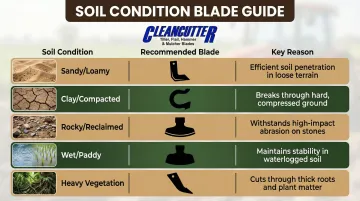
| Soil Condition | Recommended Blade | Key Reason |
|---|---|---|
| Sandy / Loamy | L-shape or Bolo | Low resistance; even depth without over-throwing soil |
| Clay / Compacted | C-shape or Pick & Chisel | Progressive entry; reduces shock and rotor stall |
| Rocky / Reclaimed | Hard-faced (30MnB5, 48–52 HRC) | Impact absorption without fracturing |
| Wet / Paddy | Wide-profile wet-field blade | Mud shedding; reduced drag in waterlogged soil |
| Heavy Vegetation | Slasher tine | Cuts through roots and sod without wrapping |
Key Factors to Consider When Choosing Tiller Blades
Soil type is the starting point. The final blade decision also factors in tilling depth, equipment specifications, expected service intervals, and total cost of ownership.
Tilling Depth and Penetration Angle
Required tilling depth affects which blade angle is appropriate:
- Shallow cultivation in loose ground: Steeper L-shape angles drive cutting edges into soil faster
- Deep soil breaking in resistant soils: Gradual C-shape curves penetrate deeper without overloading the PTO
Modifying the sweepback angle of an L-shaped blade to 18 degrees results in power requirements that are 26.39% and 16.50% lower than sweepback angles of 6 degrees and 12 degrees respectively. Incorrect blade angle for target depth increases fuel consumption and tractor horsepower demand, shortening equipment service life.
Blade Material and Hardness Grade
Blade hardness must match soil abrasiveness. Three hardness tiers cover most conditions:
- Plain/standard blades — suited for moderate conditions and lighter soils with minimal rock content
- Hard-faced blades — feature a reinforced wear surface for consistently abrasive or rocky soils; highly abrasion-resistant, though slightly more brittle under extreme impact
- Advanced-coating blades — Clean Cutter's Super-Koat technology adds a surface layer that extends blade life beyond standard hardening, reducing replacement frequency and cost per acre
Equipment Compatibility and Mounting Specifications
Blades must match the tiller's rotor configuration, including:
- Mounting hole pattern
- Blade orientation (right-hand vs. left-hand)
- Blade length
- Bolt specifications
Using an incompatible blade—even a high-quality one—creates vibration, uneven wear, and potential rotor damage. Mismatched blades increase vibration-related maintenance costs and can void equipment warranties. Always use manufacturer cross-reference charts to confirm fitment before purchasing.
Vegetation Density and Organic Matter Content
Heavily vegetated fields or soils high in organic matter require blades that can cut cleanly without wrapping. Prefer Slasher tines or blades with a sharper leading edge over standard Bolo tines, which may struggle to sever thick stems and roots cleanly.
Replacement Frequency and Total Cost of Ownership
The "cheapest" blade is rarely the lowest-cost option over a season. Blade longevity varies dramatically across material grades in similar soil conditions:
- Standard blades in normal soil: 20–200 hours
- Premium imported blades: 300–350 hours
- Hard-faced blades in abrasive soil: 2.5x longer than standard
Upgrading blade hardness grade or surface coating often pays back within the same season through reduced replacement labor and downtime. Consider the math: a 7-foot tiller with 9 flanges and 6 blades per flange means removing and torquing 108 bolts per blade change. Using blades that last 2.5 times longer cuts that workload significantly across a season.
How Clean Cutter Can Help
Clean Cutter has manufactured replacement tiller and flail blades since 1963. That's over six decades of working across the full range of soil conditions agricultural and landscaping operators actually face — and the product line reflects it.
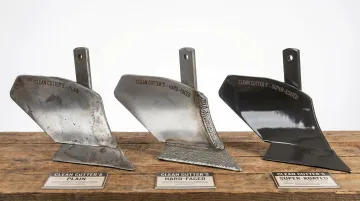
Blades are available in three hardness grades — Plain, Hard-Faced, and Super-Koated — so you can match durability to your specific soil and application rather than settling for a one-size-fits-all option. Key features include:
- Super-Koat coating for extended blade life in high-wear, abrasive soils
- Hard-faced blades built for rocky or heavily compacted ground
- Cross-reference catalog covering major brands: Alamo-Mott, Rhino, Maschio, Loftness, Seppi, and more
- Direct ordering via sales@cleancutter.com or (800) 345-2335
Finding the right blade for your equipment is straightforward — search by OEM part number or equipment brand to confirm fitment before you order.
Conclusion
Blade shape, material, and hardness grade all have to work together. Get that combination right for your soil conditions, and you get a clean seedbed with minimal equipment stress. Get it wrong, and you're looking at accelerated wear, poor soil preparation, and unnecessary downtime.
To recap the key decisions covered in this guide:
- Match blade shape (C, L, or straight) to soil texture and tillage depth
- Choose material grade (plain, hard-faced, or Super-Koat) based on abrasion and rock exposure
- Revisit blade selection when field conditions change between seasons or plots
That last point matters more than most operators expect. Blade selection isn't a one-time call — wear patterns shift as soil conditions change. Checking blade wear against current field conditions on a regular basis is the most reliable way to dial in replacement intervals and reduce long-term operating costs.
Frequently Asked Questions
What are the different types of tiller blades?
The main tiller blade types are Bolo (standard curved blade for deep tilling), Pick & Chisel (hard or rocky soil), Slasher (heavy vegetation), C-shape (clay/compacted soil with progressive penetration), and L-shape (sandy/loam soil with aggressive cutting).
Should tiller blades be sharp?
Sharpness matters most for Slasher tines used in vegetation-heavy soil. Standard Bolo and C/L-shape tines rely more on blade geometry and material hardness than razor sharpness, but excessively worn or rounded edges reduce penetration and increase fuel consumption.
How often should tiller blades be replaced?
Watch for reduced penetration depth, visible edge rounding, or measurable metal loss — these signal replacement is due regardless of hours logged. Hard-faced or coated blades typically last 2.5 times longer in abrasive conditions than plain blades.
What is the difference between hard-faced and standard tiller blades?
Standard blades are made from uniformly heat-treated steel suitable for moderate soils. Hard-faced blades have a reinforced wear surface applied to the cutting edge, making them more resistant to abrasion in rocky, sandy, or heavily compacted soils. The trade-off is slightly reduced impact toughness under extreme conditions.
How much horsepower does a 7-foot tiller need?
A 7-foot (84-inch) rotary tiller typically requires between 30 and 85 PTO horsepower, depending on manufacturer and model. Harder soils, deeper tilling depths (7+ inches), and 6-blade-per-flange rotors all push requirements toward the upper end of that range.
What is the best month to till a garden?
Fall tilling lets organic matter break down over winter; spring tilling should wait until soil is no longer saturated. Tilling wet soil compacts it under the tiller's weight and reduces the effectiveness of any blade type. Use the ball test — if soil crumbles when squeezed, it's ready.